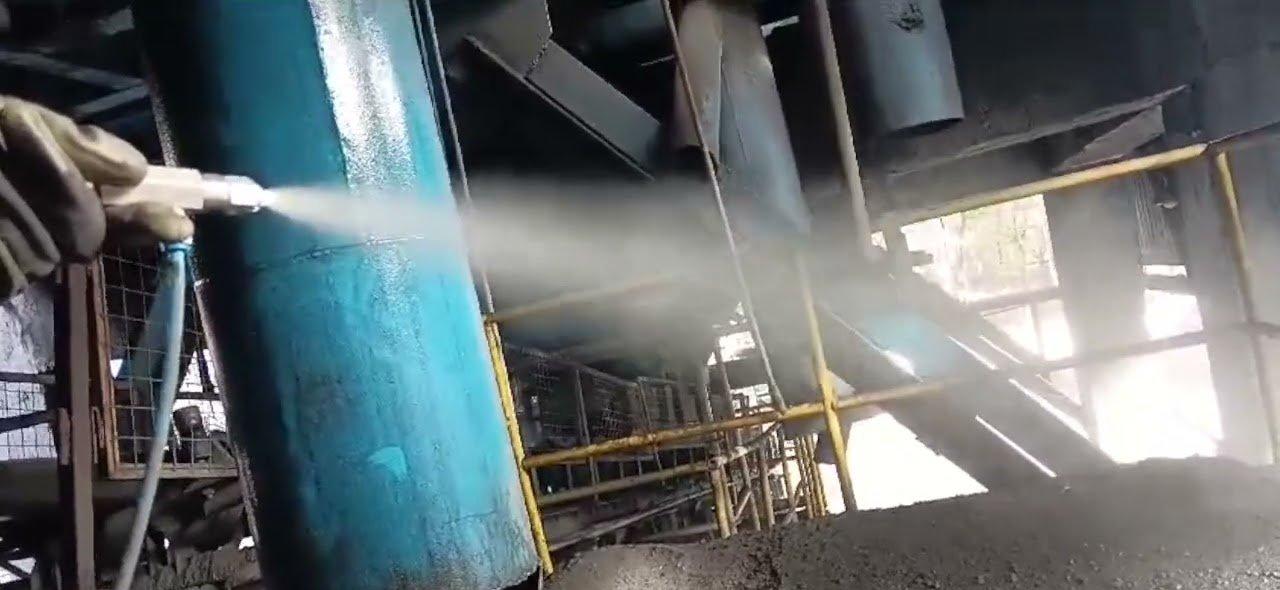
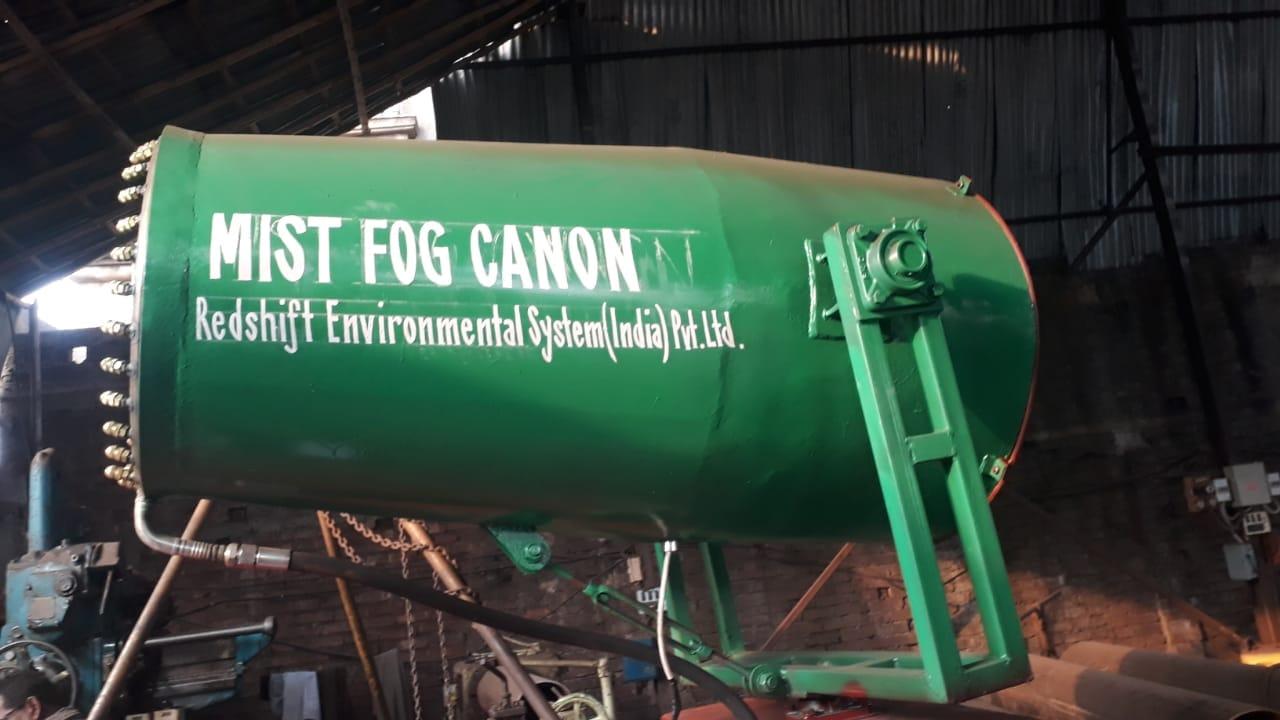
Dry fog systems and fog cannons work on the same principle. Water droplets close in size to the dust particles collide with them, bind together and settle. The difference is where each one works best.
Dry fog: at the source
A dry fog system mounts nozzle headers right where dust is created: crusher inlets, conveyor transfer points, hoppers and wagon tipplers. Dual-fluid nozzles use compressed air and water to make droplets of 1 to 10 microns, the same size as respirable PM10 and PM2.5 dust.
Because it works inside the chute or skirt board, the dust is knocked down before it escapes. Moisture added to the material can be kept to about 0.1% by weight or less, which matters for coal, clinker, cement, clay, lime and ores.
Fog cannon: across open areas
A fog cannon uses a high-pressure pump and an axial fan to throw fog over a wide area, from about 20 m to 150 m or more depending on the model. It suits stockpiles, open yards, mine faces and demolition sites, where fixed nozzle lines are not practical.
The fan needs significant power, typically 15 to 45 kW, and its air stream makes it a poor fit for enclosed chutes and indoor transfer points.
A quick guide
- Dust made inside equipment (chutes, crushers, hoppers): dry fog
- Dust over open areas (stockyards, haul roads, mine faces): fog cannon or rain guns
- Moisture-sensitive material: dry fog
- Equipment that must move between locations: mobile or truck-mounted fog cannon
Many plants use both: dry fog at the transfer points and fog cannons or rain guns over the yard. Results depend on the material, the enclosure and the weather, so we survey the site before recommending a system.